Problems Based on Water Use Classification: Rivers, Lakes, and Sea Areas
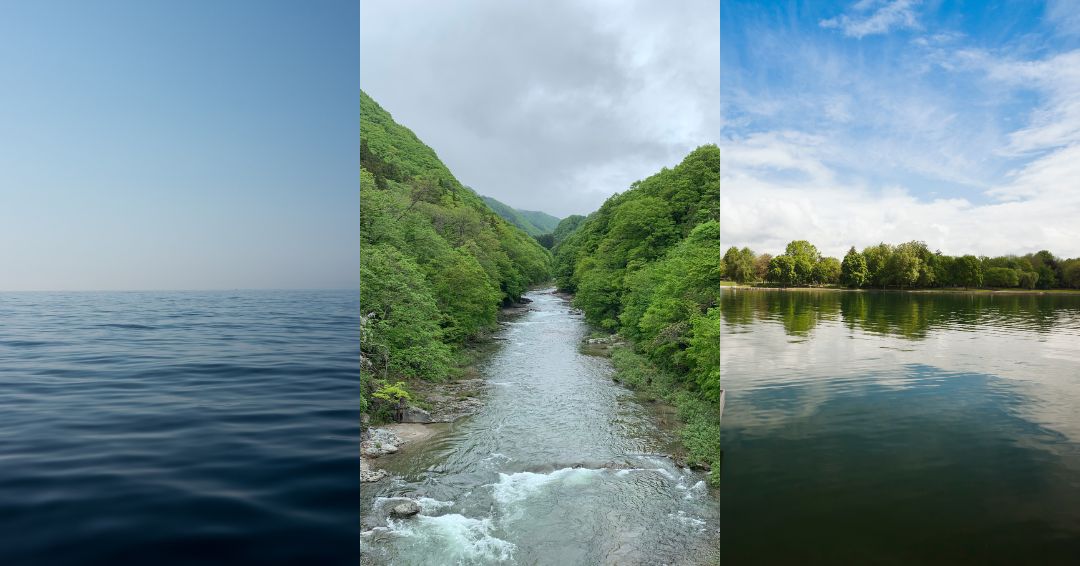
Water is one of the most vital resources for life and the environment. However, water quality faces various challenges due to human activities and environmental changes. Rivers, lakes, ponds, and sea areas each have different characteristics, so the pollution issues in each vary. Understanding these problems is the first step to maintaining sustainable water resources and ecosystems.
1. Rivers
Rivers serve as a source of water and as a disposal route for domestic, agricultural, and other wastewater. Rivers are part of a broader water recycling system, so controlling pollution loads and managing water quality must be done across entire river basins.
a. Upstream Areas
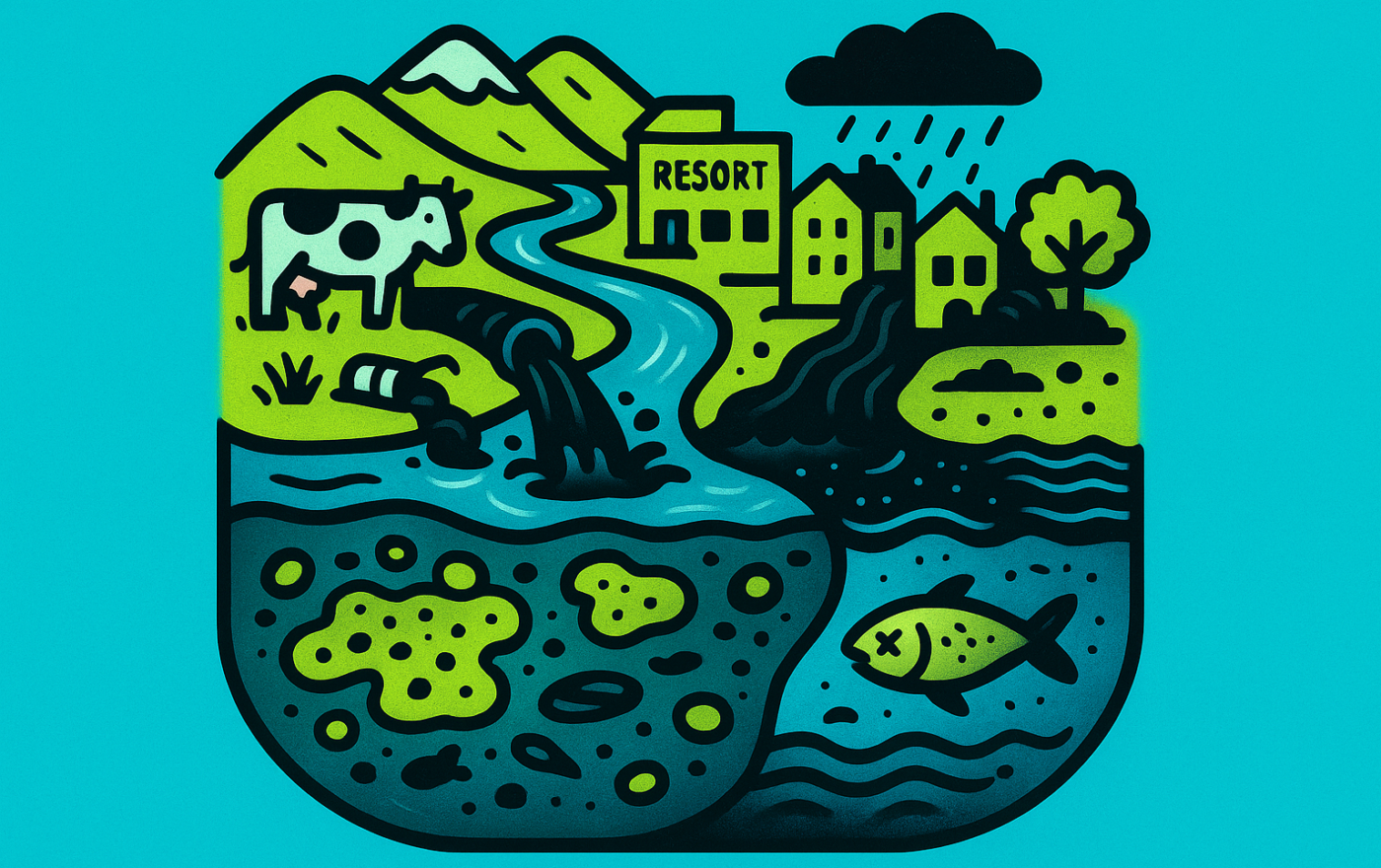
In upstream areas, some mountain streams still have the natural ability to purify water. However, pollution loads are increasing due to:
- Livestock waste
- Waste from resorts and recreational facilities
- Air pollution dissolved into water
As a result, the actual water quality is often worse than it appears.
b. Midstream Areas
In midstream areas, water quality deteriorates due to wastewater from small and medium-sized cities lacking proper sewage systems. Water quality preservation measures are needed in city drainage and sanitation systems.
c. Downstream Areas
In downstream areas, the problem becomes more severe because:
- Rainwater runoff coefficients are rising
- Large amounts of rainwater are discharged into rivers
- Flow velocity is slow in plain areas
- Pollutants settle and accumulate at the river bottom
This causes persistent or perpetual pollution.
2. Lakes and Ponds
Water in lakes and ponds is stagnant, making it more vulnerable to quality deterioration. In the past, sudden eutrophication rarely occurred because the food chain maintained balance in the ecosystem.
However, a large inflow of nutrients disrupts this balance, causing:
- Rapid population increases of certain organisms
- Decline or extinction of other organisms
- Disturbance of the overall ecosystem
Special problems occur in mountain areas where man-made facilities have been constructed and dairy farming developed. Pollution loads increase, including from artificial lakes built in areas unsuitable for natural lakes.
The main difference from rivers is that in lakes, incoming pollution:
- Changes its form
- Settles at the lake bottom
- Accumulates with dead organisms
- Later washes back into the water over time
Therefore, handling lake pollution requires attention to incoming loads (inflow) and internal recurrent loads (internal loading).
3. Sea Areas
Sea areas face problems similar to rivers and lakes, but with seawater involved. In bays and stagnant areas, issues resemble lakes and marshes. In areas with ocean currents, problems are similar to rivers.
However, sea areas have unique characteristics:
- Vast and interconnected areas
- Pollution sources are difficult to identify
- Pollution processes are complex compared to rivers or lakes
- Basin size and flow direction are not fixed
Compared to inland waters, sea pollution poses a significant threat to the fishing industry.
Want to know how clean the water in rivers, lakes, or seas near you is? Learn about the Water Quality Index (WQI) to get a complete picture of water quality and pollution factors.
