Pump Vibration Causes & Solutions (Rotary Imbalance)
Vibration Caused by Unbalance of Rotary Components
Pump vibration is not just a disturbance, it often indicates that something inside the system needs attention. One of the most common sources is unbalance in rotary components. Below are several typical causes, how they are detected, and recommended corrective actions.
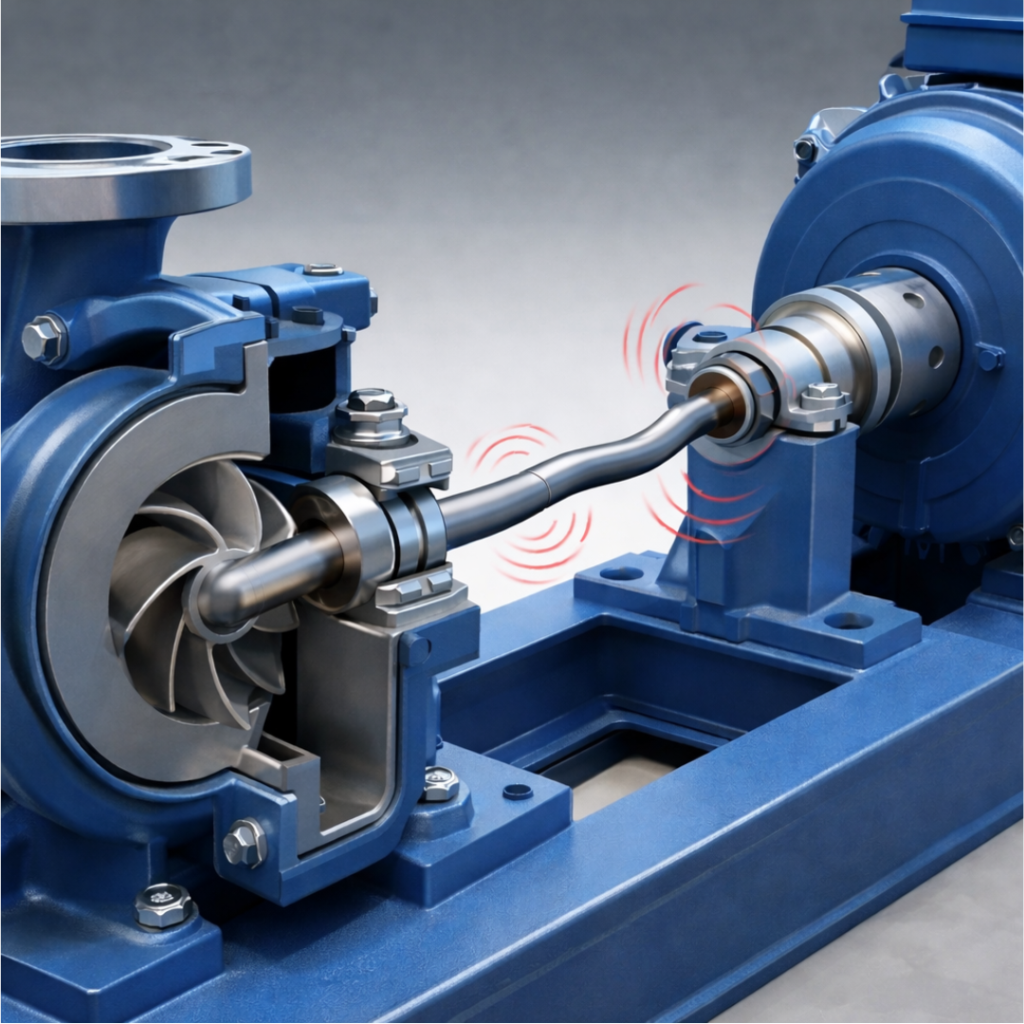
A. Bent Shaft
Detection / Symptoms:
- When shaft coupling bolts are changed one pair at a time, vibration amplitude changes gradually and may decrease significantly.
- In fixed shaft seal systems, inserting a thin liner between coupling faces changes vibration amplitude. In some positions, it decreases noticeably.
Corrective Action:
- Find the bolt arrangement that produces the lowest vibration level, then tighten accordingly.
- Correct shaft bending or replace the shaft if necessary.
B. Residual Imbalance of Rotary Components
Detection / Symptoms:
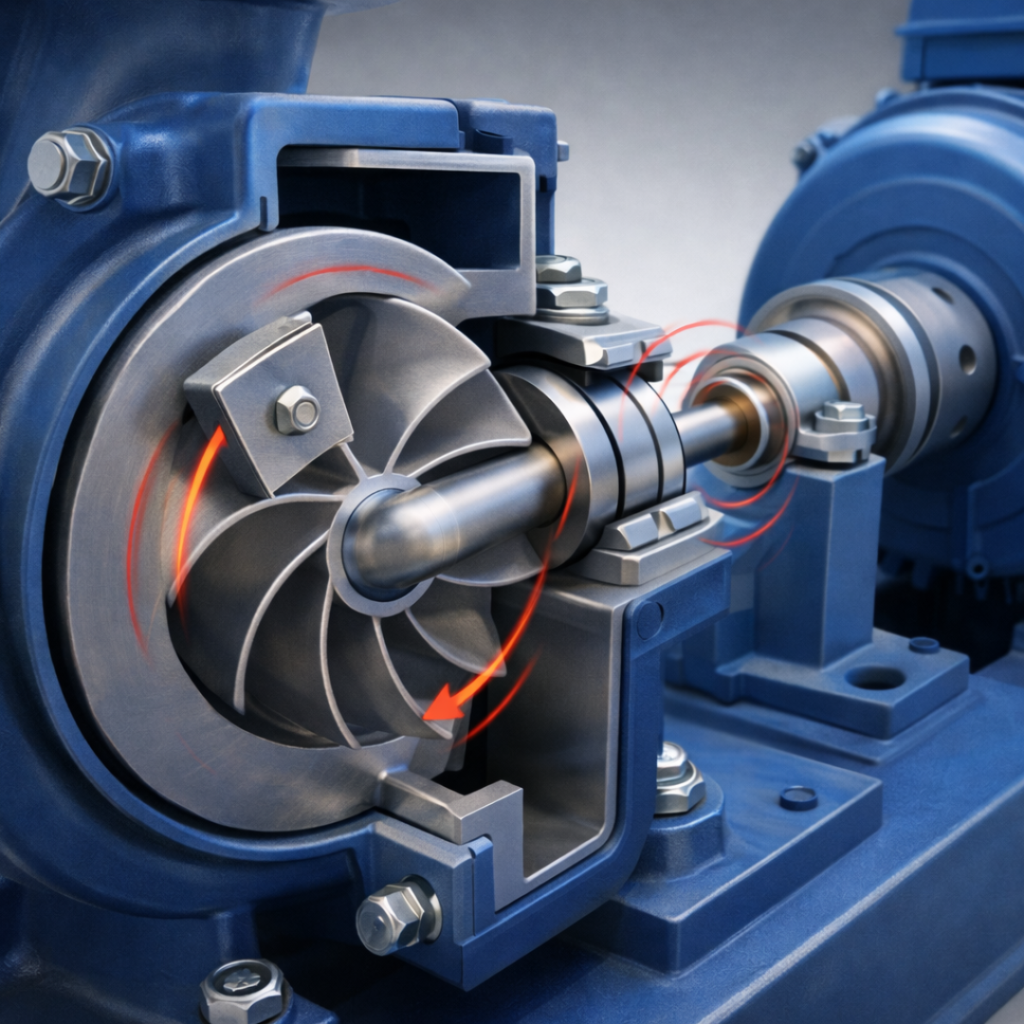
- Vibration appears after installation or after replacing components such as impellers.
- When weights are added to certain coupling bolts, vibration amplitude changes—sometimes decreasing significantly.
Corrective Action:
- Readjust the balance of rotary components according to standard specifications (e.g., JIS standards).
C. Impeller Imbalance (Wear or Damage)
Detection / Symptoms:
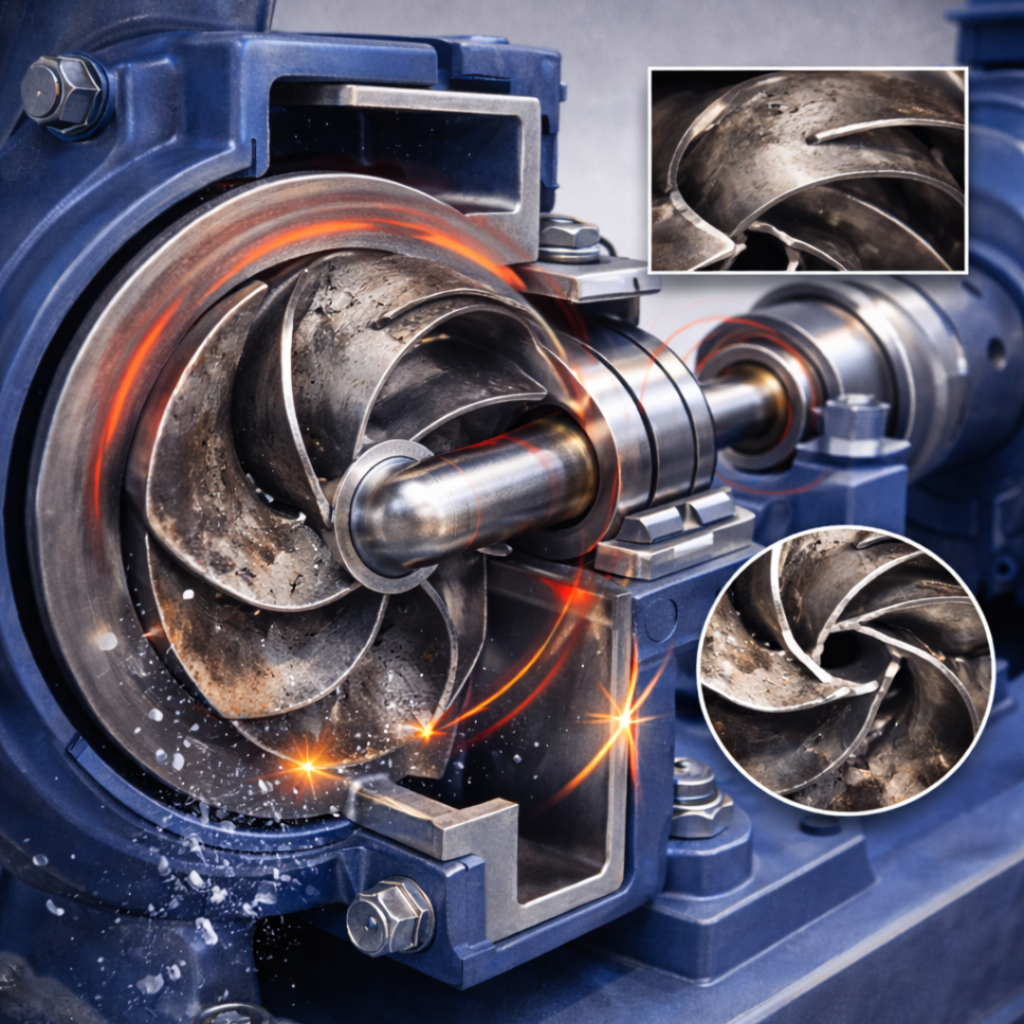
- Vibration increases gradually due to wear or suddenly in case of damage.
- Inspection can be done through upper casing or manhole access.
Corrective Action:
- Rebalance the impeller if wear is the cause.
- Replace the impeller if damage is found.
D. Impeller Imbalance Due to Foreign Material
Detection / Symptoms:
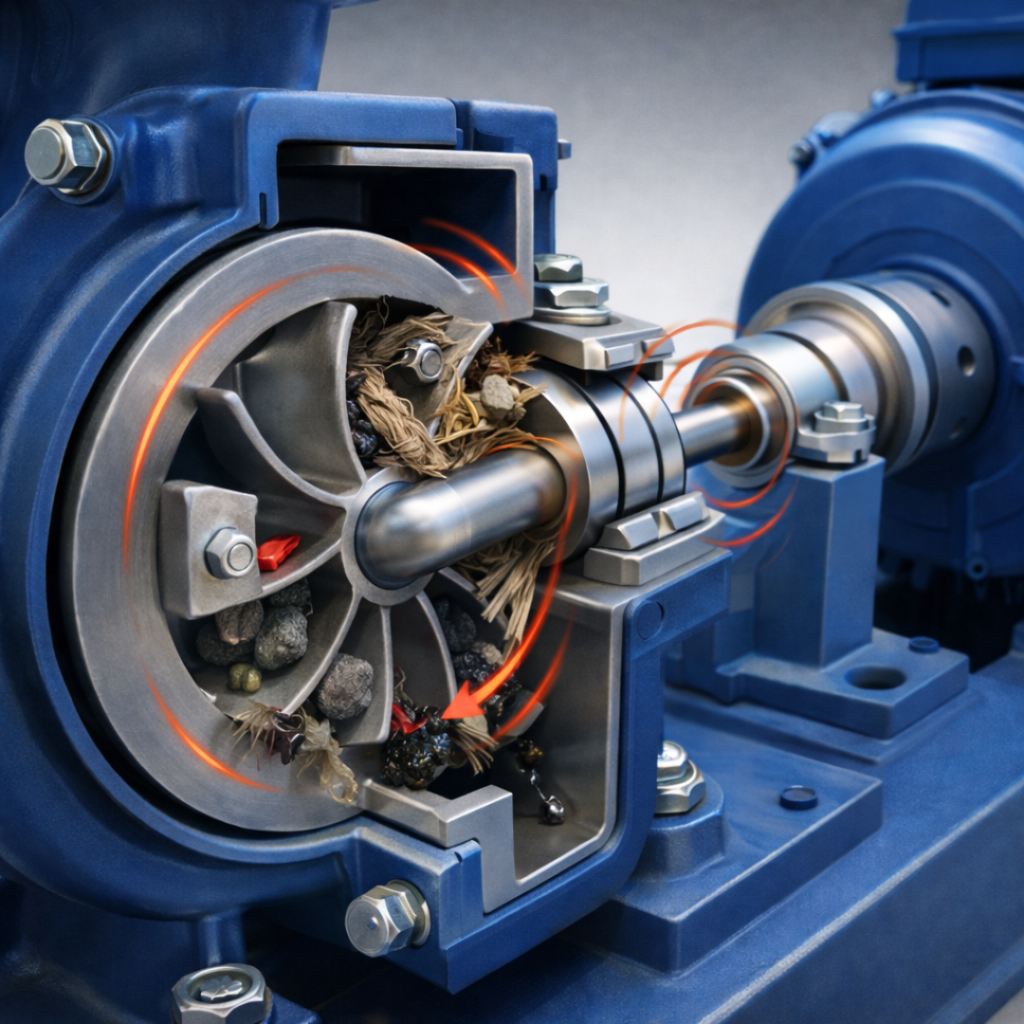
- Sudden increase in vibration with noise coming from inside the pump.
- Discharge pressure drops and flow decreases.
- Ammeter and wattmeter readings fluctuate.
Corrective Action:
- Inspect the pump internally.
- Remove any foreign material.
- Check the impeller for possible damage.
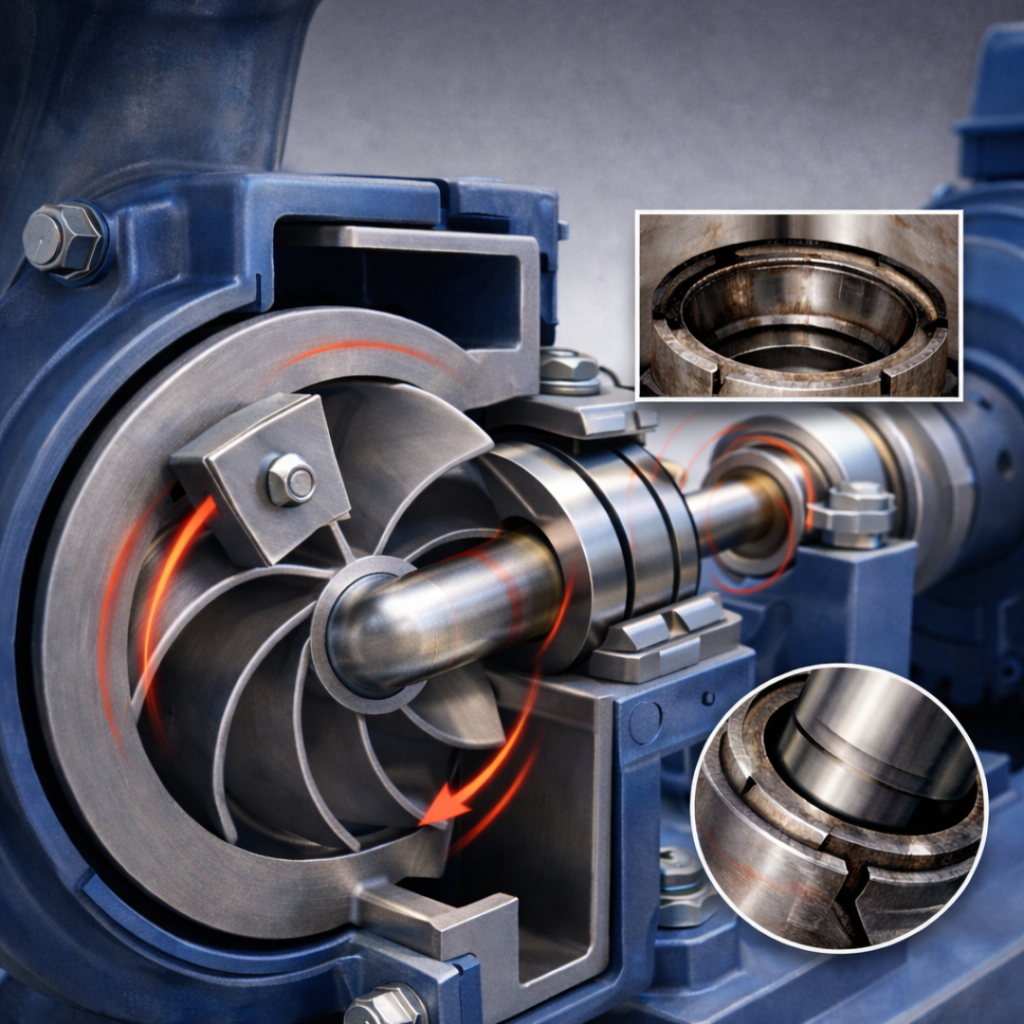
E. Shaft Rotation Becomes Eccentric (Bearing Wear)
Detection / Symptoms:
- Lubricant condition is not clean or volume is insufficient.
- When motor runs independently (without coupling), vibration does not occur.
- Vibration appears during pump stopping, especially at low RPM.
Corrective Action:
- Disassemble the pump and replace worn bearings.
- Identify and address the root cause of bearing wear.
Note:
Regular inspection and early detection are key to maintaining pump performance and extending equipment lifespan.
